
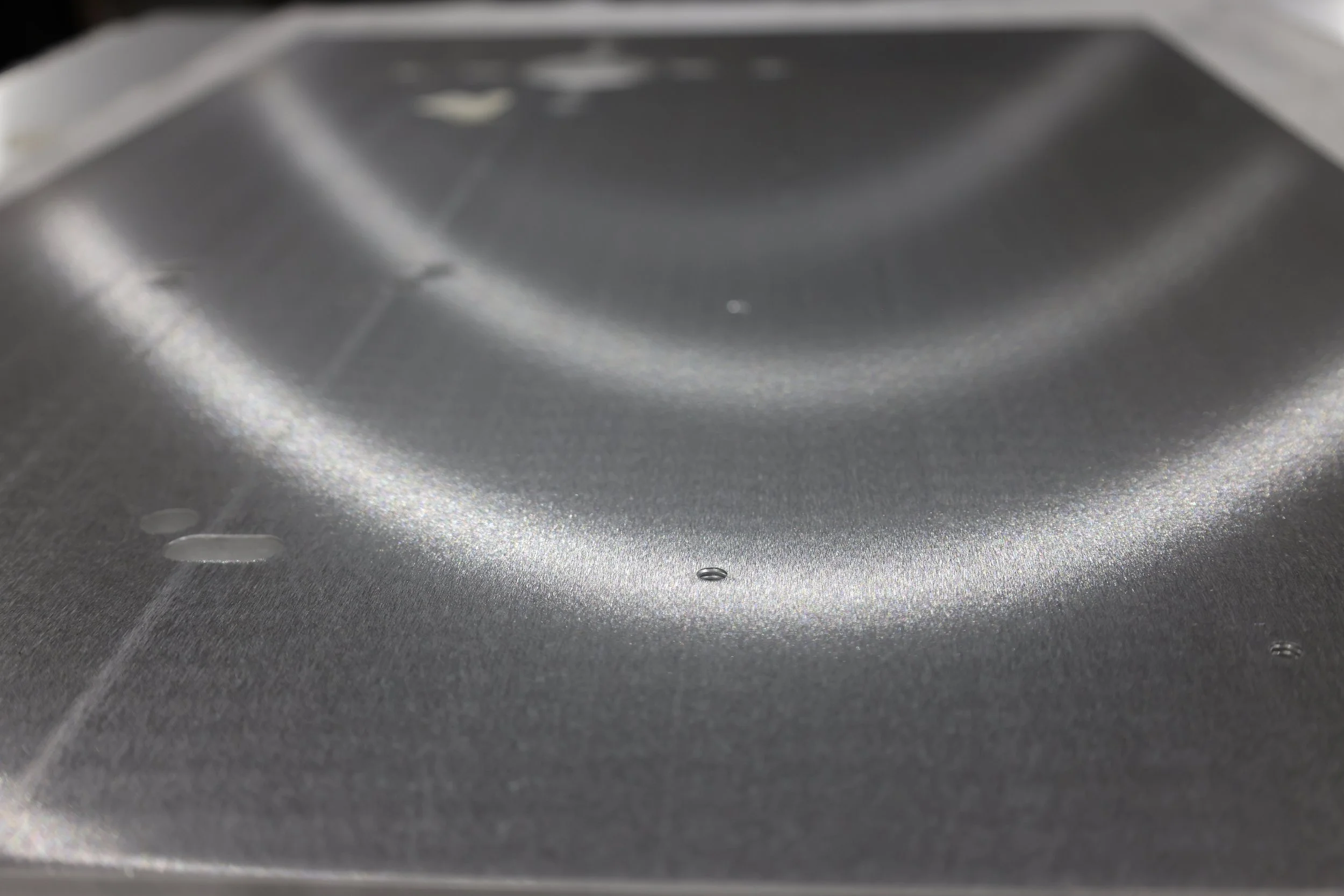
Metal Fabrication Materials List
Choosing the right material is one of the most consequential decisions in any fabrication project. It affects part performance, lead time, cost, and manufacturability. Our engineers work with you from the start to match your design requirements to the right material, grade, and fabrication process. Below is a complete list of the metals HPM is equipped to fabricate.

Raw Metals We Work With
Carbon Steel: 1018, 1008, A36
Galvanized Steel: G30, G60, G90
Galvanneal Steel: A40, A60
Aluminized Steel: Type 1, Type 2
High-Strength Steel: Grade 50, Grade 80, 4130, 4140
Spring Steel
Steel
304, 301, 430, 316, 316L
Stainless Steel
5052, 6061, 3003
Aluminum
Copper
Brass
Pre-Painted Steel
Pre-Painted Aluminum
Pre-Anodized Aluminum
Specialty Metals
Material selection depends on how the material behaves under force, heat, and corrosion, as well as the specific demands of your environment and manufacturing process. Here are the key factors HPM's engineers consider for every project:
How to Choose the Right Fabrication Material
Strength and Load Requirements: High-strength steels like Grade 80 or 4130/4140 alloy steel are appropriate for structural or load-bearing components. For lighter applications, aluminum alloys such as 5052 or 6061 offer an excellent strength-to-weight ratio without added mass.
Corrosion Resistance: Parts destined for outdoor, wet, or chemically active environments benefit from galvanized coatings, stainless steel (316/316L especially), or aluminum. Galvanneal and aluminized steel add both coating adhesion and corrosion protection for painted end products.
Fabrication Process Compatibility: Not every material behaves the same under turret punching, brake forming, or laser cutting. Grain structure, thickness, and temper affect everything from burr formation to springback. Specifying the right alloy and temper upfront prevents costly rework.
Surface Finish and Secondary Operations: Pre-painted and pre-anodized materials can eliminate downstream finishing steps, reducing handling, lead time, and the risk of nonconformance.
Cost-Effectiveness: The most expensive material isn't always the right one. A36 carbon steel handles a wide range of structural applications at a fraction of the cost of specialty alloys. HPM's team identifies opportunities to use the most cost-effective material without sacrificing performance.
Materials and Design for Manufacturing (DFM)
Material selection and part design are inseparable. A design that works perfectly in one material may be unmachinable, prone to cracking, or unexpectedly expensive in another. That's why HPM incorporates Design for Manufacturing (DFM) review into every new project.
Our team of full-time engineers evaluates how your chosen material interacts with your design at the feature level: hole sizing relative to material thickness, bend radii relative to grain direction, tab geometry relative to punch force, etc. Getting this right at the design stage is where real cost savings happen.
Why Work With HPM
Broad Material Range: We have the equipment, tooling, and engineering expertise to fabricate all our listed materials to spec. From standard A36 structural steel to pre-anodized aluminum for consumer-facing applications, we've done it.
ISO 9001:2015 Certified Quality: Every material that comes through our facility is processed under a strict quality management system.
Material-Informed Engineering: Our engineers evaluate material compatibility with your design, environment, and manufacturing process, and flag issues before they become costs.
Strategic Partnership: We get to know your products. That means when a material substitution becomes necessary, due to availability, cost, or a design change, we can make a recommendation that protects your part's performance and your timeline.
Industries HPM Serves
The materials we work with span the full range of industries we serve, from high-strength steels and specialty alloys for military and defense applications to pre-painted and pre-anodized metals for consumer products and electronics. Every industry has different material demands, and HPM has the experience to meet them.


Ready to Start Your Project?
Tell us about your material requirements and project specs. HPM's engineering team will review your design, confirm material compatibility, and provide a quote.
Frequently Asked Questions: Metal Fabrication Materials
-
Carbon steel (particularly A36 and 1018) is the most widely used fabrication material because it's cost-effective, widely available, and performs well across a broad range of structural and mechanical applications. Stainless steel (304) and aluminum (5052, 6061) are close behind for applications requiring corrosion resistance or reduced weight.
-
All three are coated steel products, but they serve different purposes. Galvanized steel (G30–G90) has a zinc coating that provides strong corrosion protection and is common in outdoor and structural applications. Galvanneal (A40, A60) is a zinc-iron alloy coating that bonds better with paint and is preferred for painted end products. Aluminized steel (Types 1 and 2) uses an aluminum-silicon coating for high-heat resistance, making it common in exhaust and heat-shield applications.
-
Material cost is just one piece of the equation. The material's behavior during fabrication directly impacts tooling wear, cycle time, scrap rate, and secondary operation requirements. A higher-cost material that fabricates cleanly can be more economical overall than a cheaper material that introduces handling issues or requires post-processing. HPM's DFM process evaluates total cost, not just raw material price.
-
Yes. Material selection is a core part of HPM's engineering process. Our team evaluates your design, application environment, target cost, and manufacturing process to recommend the best material and grade. If you're early in the design phase, we can review your CAD model and provide DFM feedback alongside material recommendations.
-
HPM works with a wide range of specialty metals, including copper, brass, pre-painted steel, pre-painted aluminum, and pre-anodized aluminum, as well as our full portfolio of steel and aluminum. For materials not listed here, contact us. Our sourcing relationships and engineering team can often accommodate project-specific needs.